What Clients Say?
Here are testimonials from clients.


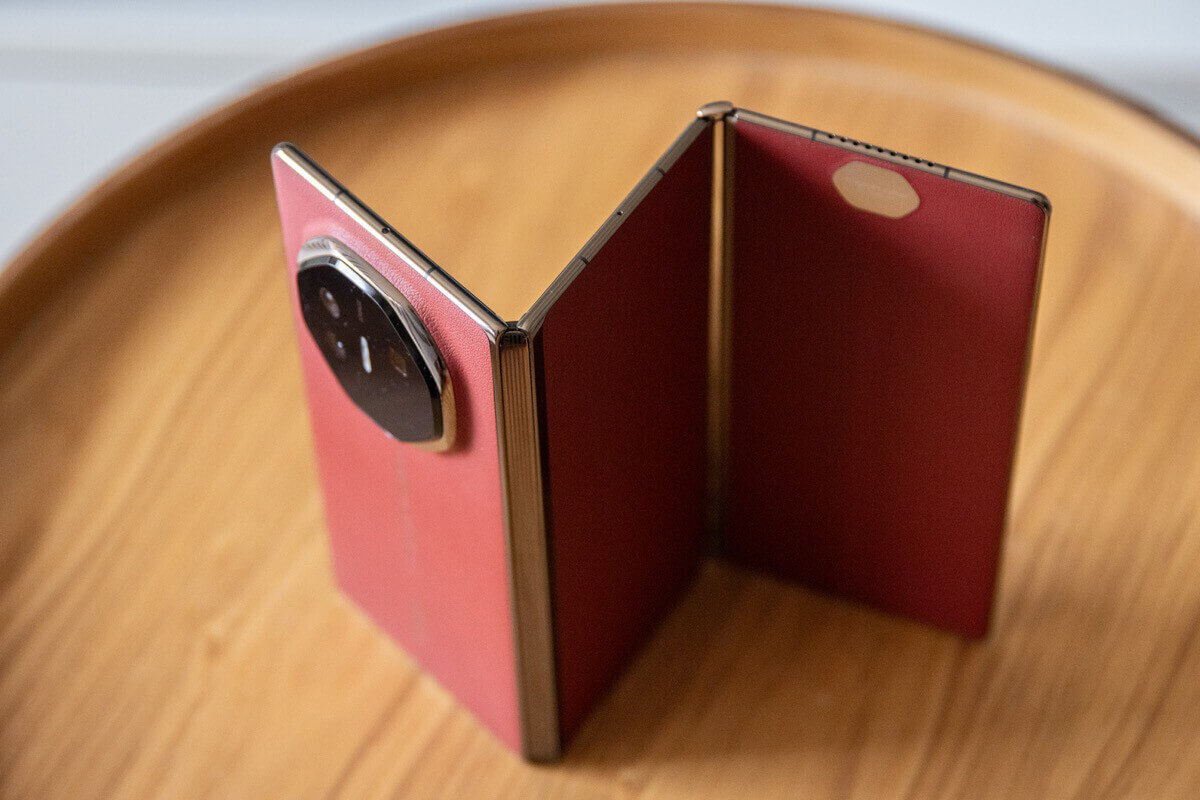
More than 100 phones will be launched in 2025, and not one is smaller than six inches: the compact phone is dead.
Back in 2011, we were talking about the Samsung Galaxy Note as if it were the lovechild of a mobile phone and a tablet. In fact, those of you who are more experienced will probably remember the term phablet . It's been a while, eh? The Galaxy Note was a huge mobile phone, enormous for its time. Its screen was an "unbelievable 5.3 inches" ( Xataka's exact words ), a much larger figure than the 2010 Galaxy S , whose panel was four inches.
This was the usual trend for the following years. More and more mobile phones were launched, but in 2014 something started to change. This was the year of the Nexus 6 , the OnePlus One , and the Samsung Galaxy Edge (the one with the curved screen). Also released were the Huawei Ascend Mate 7 and the Sony Xperia T2 Ultra . Larger and larger mobile phones began to appear with Full HD screens and 16:9 aspect ratio, just like televisions and monitors.
Screens kept getting bigger, but the format was always the same: 16:9. This meant that if we wanted to increase the screen size, we had to increase the width of the phone significantly. So much so that the 2014 Ascend Mate 7, with its six-inch screen, was 157 millimeters high and 81 millimeters wide. To put that into context, the Galaxy S25 Ultra , one of the largest phones of 2025, is 162 millimeters high and 77.6 millimeters wide. Phones were getting huge, in every sense, but growing at that rate wasn't sustainable.
Then manufacturers realized: why continue to draw inspiration from TVs and monitors? What if instead of making 16:9 panels, we stretched them upwards and made them more panoramic? That's when six inches began to become the standard for the high-end. Already in 2017, we had devices like the Galaxy Note8 with a 6.3-inch 18.5:9 aspect ratio and the LG V30 (RIP), with a six-inch 18:9 aspect ratio.
That little number tells us the ratio between the width and height of a rectangle. Until now, for every 16 pixels of height, we had nine pixels of width, and vice versa. If we wanted to increase the screen size, which made sense considering the mobile phone as the primary device for every user, the only option available to avoid ending up with bricks in our pockets was to maintain the width and increase the height. And that's what happened: the 16:9 format was doomed.
The 18.5, 19, and 19.5:9 aspect ratios have the advantage of allowing you to add inches at the expense of stretching the phone upwards, but everything has its limits. There comes a point where such an elongated screen becomes uncomfortable , as we've seen with some phones that have pushed the aspect ratio to the extreme. It seems like our hands can't stretch any further, so the next natural step seems obvious: foldable phones.
While it's a technology with a long way to go (the first Galaxy Fold was launched in 2019), these devices allow for larger screens in a more conventional format. In that sense, manufacturers have already more than addressed the issue of thickness (just take the OPPO Find N5 's mere four millimeters ), and now they have to do the same with the screen's fold. It's a challenge, but it seems the path is heading in that direction.
 Previous
  Next
Next 
Here are testimonials from clients.




We will contact you in the same day.